


Key Takeaways
- Power steering rack converts steering wheel rotation into wheel movement with hydraulic assistance to reduce driver effort
- Common leak causes include worn seals, damaged O-rings, and high fluid pressure wearing components over time
- Replace power steering rack when experiencing persistent leaks, excessive steering effort, or unusual noises during turning
- Regular fluid checks and maintenance can extend power steering rack lifespan and prevent costly repairs
- Professional diagnosis is essential as steering problems affect vehicle safety and control
Every time you turn your steering wheel, a sophisticated mechanical process transforms your input into precise wheel movement. The power steering rack serves as the heart of this system, making modern driving comfortable and safe. Without this crucial component, steering your vehicle would require significantly more physical effort, especially in larger cars and trucks.
Understanding how your power steering system works can help you identify problems early and maintain your vehicle properly. This guide covers everything you need to know about power steering racks, from basic function to replacement timing.
What is a Power Steering Rack
The power steering rack is the core component that converts rotational motion from your steering wheel into the linear motion needed to turn your wheels. Unlike older manual steering systems that relied purely on driver strength, the power steering rack uses hydraulic assistance to multiply the force you apply.
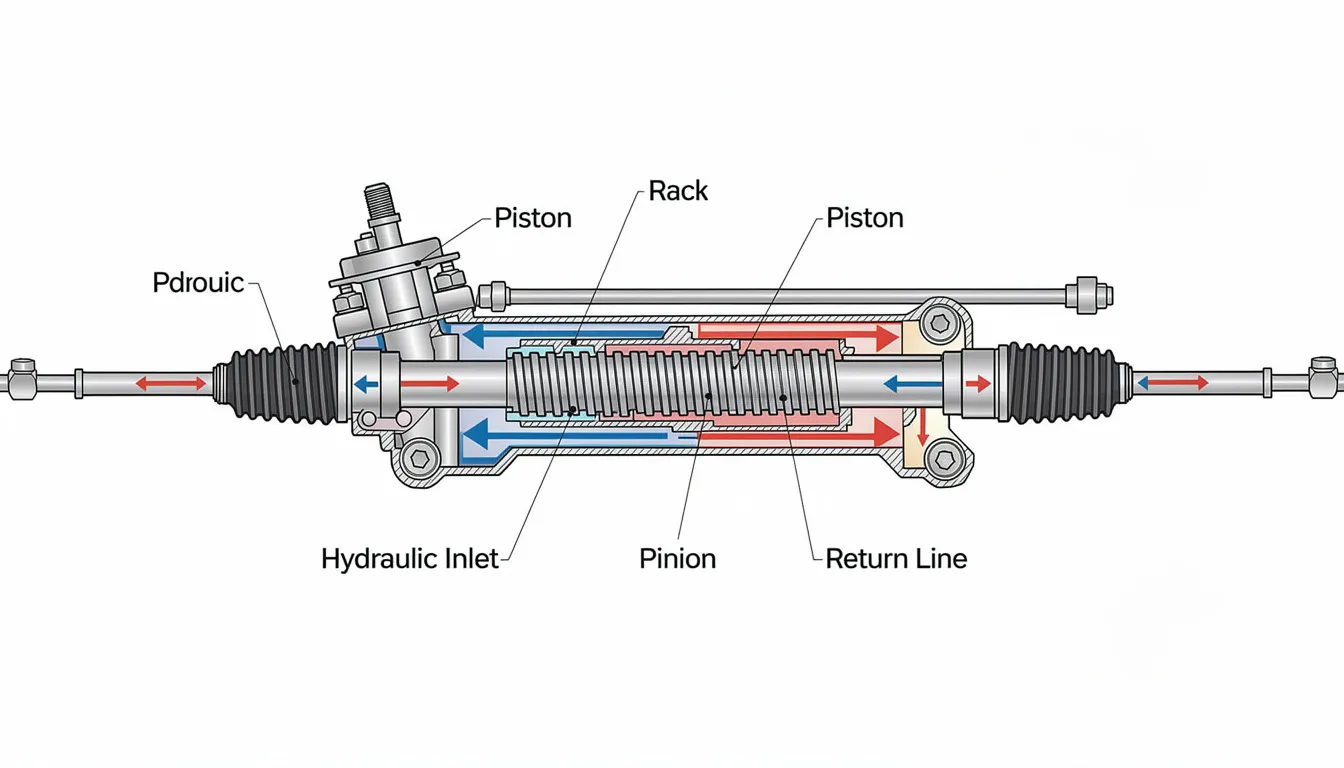
Located behind your vehicle’s front bumper and connected to the front wheels, the power steering rack consists of several key parts. The main housing contains a hardened metal tube with precision-cut teeth along one side. Inside this housing, a piston moves back and forth within a cylinder, creating the hydraulic action that provides steering assistance.
The rack connects directly to your vehicle’s wheels through tie rods, which transfer the linear motion from the rack to the steering knuckles. When you turn the steering wheel, the pinion gear spins and engages with the teeth on the rack, forcing it to move left or right.
Most cars today use rack and pinion steering systems because they’re more efficient and compact than traditional steering gearbox designs. This system became standard as vehicles got heavier and faster, making manual steering impractical for everyday driving.
The power steering system includes additional components that work together with the rack. The power steering pump, driven by your engine, creates the hydraulic pressure. Power steering fluid flows through lines to provide the hydraulic assistance, while a reservoir stores the fluid.
How Power Steering Rack Works
The power steering rack operates through a combination of mechanical and hydraulic principles that work together seamlessly. When you turn the steering wheel, the steering shaft transmits this rotational motion down to the pinion gear at the top of the rack assembly.
As the pinion gear spins, it meshes with the teeth cut into the rack, converting the circular motion into linear motion. This basic mechanical action would work without power assistance, but it would require substantial effort from the driver.
The hydraulic assistance comes from a piston located inside the rack’s cylinder. This piston has fluid ports on both sides, connected to the power steering system’s hydraulic lines. When you turn the steering wheel, internal valves direct pressurized power steering fluid to one side of the piston.
The pressurized fluid pushes against the piston, helping move the rack in the direction you’re steering. This hydraulic assistance multiplies your input force, making steering feel effortless. The harder you turn the steering wheel, the more hydraulic pressure is applied, providing variable assistance based on your needs.
 The gear reduction in the system affects how much you need to turn the steering wheel to achieve wheel movement. Sports cars often have lower steering ratios for quicker response, while small trucks might use higher ratio systems for easier control. Variable ratio steering adjusts this relationship based on driving conditions.
The pump continuously circulates power steering fluid through the system. This fluid not only provides hydraulic pressure but also lubricates moving parts and helps dissipate heat. The system maintains constant pressure, ready to provide assistance whenever you need to steer.
When you straighten the steering wheel, the hydraulic pressure equalizes on both sides of the piston, allowing the rack to return to its center position. The tie rod ends transfer this movement to the wheels, completing the steering action.
Why Power Steering Rack Leaks
Power steering rack leaks are among the most common steering system problems because the component operates under intense hydraulic pressure. The seals, O-rings, and gaskets that contain the pressurized power steering fluid must withstand constant stress and temperature changes.
Over time, rubber seals naturally degrade from heat cycles and exposure to hydraulic fluid. The piston seals inside the cylinder are particularly vulnerable because they must maintain a tight seal while allowing smooth movement. As these seals harden and crack with age, they begin allowing fluid to escape.
High hydraulic pressure creates ongoing stress on all sealing components. The power steering pump generates significant pressure to provide assistance, and this constant pressure can cause component fatigue over thousands of miles of driving. Even small imperfections in seals can develop into leaks under this pressure.
Contaminated power steering fluid accelerates seal degradation. If dirt, water, or metal particles enter the system, they can damage seals and create grooves in the cylinder walls. This contamination often occurs when the system is serviced improperly or when components wear and introduce debris.
Temperature extremes affect rubber components throughout the system. Cold weather makes seals brittle, while excessive heat from engine operation can cause them to soften and lose their sealing properties. Vehicles in harsh climates often experience more frequent seal failures.
Normal wear patterns develop in high-mileage vehicles as metal surfaces gradually wear against each other. The rack housing and piston develop slight imperfections that make it harder for seals to maintain tight contact. This wear is accelerated by contaminated fluid or inadequate lubrication.
Driving conditions also influence leak development. Frequent hard steering, such as parallel parking or tight maneuvering, puts extra stress on the system. Off-road driving can introduce contamination and subject the rack to impacts that damage sealing surfaces.
The power steering lines and connections represent additional potential leak points. These connections experience the same high pressures as the rack itself, and the constant vibration from engine operation can loosen fittings or damage hose seals over time.
When to Replace Power Steering Rack
Knowing when to replace your power steering rack is essential for safety and cost-effectiveness. Persistent leaks despite repairs often mean the rack needs replacement. If seals fail repeatedly or multiple leaks appear, the rack housing may be damaged beyond repair.
Loss of power steering assistance makes driving difficult and unsafe, requiring immediate attention. Excessive play in the steering wheel signals internal wear, creating unsafe conditions that necessitate replacement.
Severe internal damage from contaminated fluid or worn parts usually means repair isn’t viable. High-mileage vehicles with multiple steering issues often benefit more from full rack replacement.
Always prioritize safety—any steering problem affecting control should be evaluated promptly. Delaying replacement can lead to more costly repairs as other components may be damaged.
Signs of Power Steering Rack Problems
Recognizing early signs of power steering rack problems can help prevent serious safety issues. Regularly monitor how your steering feels and sounds to catch problems early.
Fluid Leaks
Leaking power steering fluid often appears as reddish or amber spots beneath your vehicle, especially under the front center where the rack is located. Fresh leaks are bright red, while older leaks may be darker. Check the fluid level in the reservoir regularly; low levels indicate a leak. Dark, dirty, or foamy fluid suggests contamination or internal wear. Wet spots around the rack housing and damaged boots also indicate leaks.
Steering Performance Issues
Heavy or stiff steering means reduced hydraulic assistance, requiring more effort to turn the wheel, especially at low speeds like parking. Inconsistent power assist or a steering wheel that doesn’t return to center after turning suggests internal valve or component problems. Difficulty steering during parking maneuvers is a common symptom of system issues.
Unusual Noises
Grinding sounds during steering indicate metal-on-metal contact from worn components, which can cause rapid damage if ignored. Clunking noises often come from worn tie rod ends or internal rack parts, especially during slow turns. Whining or squealing noises usually originate from the power steering pump and may indicate low fluid or pump issues. Metal-on-metal sounds from the rack area require immediate professional evaluation to ensure safety.
Power Steering Rack Maintenance
Regular maintenance extends power steering rack life and prevents costly repairs. Simple preventive measures can identify problems early and maintain optimal system performance.
Regular fluid level checks should be part of your routine maintenance schedule. Check the power steering reservoir monthly and top off with the correct fluid type if levels are low. Never let the reservoir run completely dry.
Power steering fluid replacement intervals vary by vehicle, but most manufacturers recommend changes every 30,000 to 60,000 miles. Fresh fluid maintains proper lubrication and hydraulic properties while preventing contamination buildup.
Inspect hoses and connections during routine maintenance for signs of wear, cracking, or leaks. Replace any damaged hoses before they fail completely. Loose connections should be tightened to specification to prevent leaks.
Professional maintenance should include system pressure testing and component inspection. A qualified shop can identify developing problems before they cause complete system failure. Schedule professional inspections if you notice any steering changes.
Warning signs requiring immediate attention include any fluid leaks, changes in steering effort, unusual noises, or steering response problems. Don’t delay professional evaluation when these symptoms appear.
Keep the power steering system clean by avoiding contamination during maintenance. Use only the specified fluid type and ensure all tools and funnels are clean when servicing the system. Contamination causes premature wear and component failure.
Monitor your vehicle’s wheel alignment, as improper alignment can stress the power steering system and cause premature wear. Regular alignment checks help maintain optimal steering geometry and reduce component stress.
FAQ
Q1: How long does a power steering rack typically last?
A1: A power steering rack typically lasts 100,000 to 150,000 miles under normal driving conditions. However, this varies significantly based on driving habits, maintenance quality, and environmental factors. Vehicles that frequently perform tight maneuvers or operate in harsh conditions may require replacement sooner. Regular maintenance and prompt attention to leaks can help maximize rack lifespan.
Q2: Can I drive with a leaking power steering rack?
A2: You can drive temporarily with minor leaks, but it’s not recommended for extended periods. Monitor fluid levels closely and top off as needed to prevent pump damage from running dry. Major leaks that cause rapid fluid loss or complete loss of power steering assistance require immediate professional attention. Driving without power steering assistance, especially in larger vehicles, can be dangerous and difficult.
Q3: What happens if I ignore power steering rack problems?
A3: Ignoring power steering rack problems can lead to complete steering failure, making your vehicle dangerous to drive. Continued operation with leaks can damage the power steering pump by allowing it to run dry. Internal rack damage can affect other steering components like tie rods and cause premature wear. Additionally, repair costs typically increase when problems are left unaddressed, as secondary damage often occurs.
Q4: Is it normal for power steering rack to make some noise?
A4: Slight hydraulic noise is normal, especially when turning at idle or during parking maneuvers. However, loud grinding, clunking, or metal-on-metal sounds indicate problems requiring attention. Whining noises that worsen with steering input often suggest low fluid levels or pump issues. Any new or unusual noises should be evaluated by a professional to determine if they indicate developing problems.
Q5: Can power steering rack be repaired or must it be replaced?
A5: Power steering racks can sometimes be repaired depending on the type and extent of damage. Seal replacement and minor internal repairs are possible in some cases. However, racks with scored cylinder walls, damaged pistons, or multiple failure points usually require complete replacement. A professional evaluation can determine whether repair is cost-effective compared to replacement, considering both immediate costs and long-term reliability.
Popular Power Steering Racks at FabHeavyParts
1.
 Power Steering Rack 8-97943-519-1 8979435191 Fits for ISUZU Dmax D-max 2004-2011
Manufacture Part Number: 8-97943-519-1, 8979435191
Condition: new, aftermarket
Application: This Power Steering Rack fits for ISUZU Dmax / D-max 2004-2011
2.
 Hydraulic Power Steering Rack Gear Box MB951488 Compatible For Mitsubishi Delica L400
Guide Drive: Right Hand Drive
Part Number: MB951488
Application: This Power Steering Rack is compatible for Mitsubishi Delica L400
Condition: new, aftermarket
3.

Application: This Power Steering Rack is compatible for Ford Explorer 2013 2014 2015
Guide Drive: Left Hand Drive
Condition: remanufactured
Manufacture Part Number: DB533D070CM, EB533D070AB, EB533D070AE, DB533D070CL, 247-0024, DB5Z3504EE, DB5Z3504ME, EB5Z3504C, EB5Z3504CARM, EB5Z3504E, EB5Z3504F, EB5Z3504K, EB5Z3504N, EB5Z3504NE, EB5Z3504R, STE296, DB533D070CL, EB5Z3504B
4.

Manufacture Part Number: 32136755068, 7852955338, 7852974679, 7852974681, 32135A0A110, 7852974671, 6755067, 6755068, 6774324
Condition: new, aftermarket
Applications: This Power Steering Rack fits for BMW 3 E46 316 318i 320 325 330i 1998-2007; BMW 3 E46 330i 1997-2006
5.

Part Number: 45510-12330, 4551012330, 45510-47010, 45510-47011
Applications: This Power Steering Rack fits for Toyota Corolla NZE121 NHH20 ZRE120 Axio Fielder Runx Spacio; Toyota Prius NHW20 2003-2011 RHD
Condition: new, aftermarket
6.
 Power Steering Rack A2054603401 A2054602801 A2054609500 Compatible For Benz W205 C300
Part Number: A2054603401, A2054602801, A2054609500
Applicaiton: This Power Steering Rack is compatible For Benz W205, C300
Condition: new, aftermarket
FAB Heavy Parts Can Help With Your Needs
Welcome to Fab Heavy Parts' online catalog, where you can explore a delightful array of Power Steering Rack. We have a diverse selection to cater to your needs. Our knowledgeable parts team is at your disposal, ready to assist you every step of the way.