


Key Takeaways
- An air oil separator removes oil mist from crankcase gases, then sends cleaner air back into the intake.
- A true AOS returns separated oil to the oil pan, unlike a basic catch can that must be emptied.
- Turbo engines, including the Subaru WRX, often benefit from heated coolant lines to reduce condensation, blow-by problems, and carbon buildup.
- You’ll learn how AOS systems connect with hose barb, SAE quick connect female, coolant line, and oil return hardware.
- The right air oil separator AOS is an investment in performance, response, and long-term engine protection.
Introduction to Air Oil Separators
An air oil separator is like a filter for oily crankcase air. During combustion, pressure can leak past piston rings and create air oil blow-by inside the engine. That mixture carries oil vapor through the pcv system, with some setups routing vapors back into the intake while others vent to the atmosphere depending on system design, toward the intake manifold and intake tract.
Air oil separators are designed to intercept oil vapors in the PCV system, collecting oil residue and preventing it from entering the intake system, which can enhance engine performance. A properly functioning air oil separator can help maintain cleaner intake valves by reducing carbon deposits, which is particularly beneficial for direct injection engines.
The main purpose of an AOS is to ensure downstream air purity and recycle lubricating oil back into the system. At Fab Heavy Parts, we focus on proven, durable solutions for a road vehicle, work truck, and performance build-not gimmicks.
This guide is intended for car enthusiasts, DIY mechanics, and anyone interested in improving engine performance and longevity by understanding and installing air oil separators.
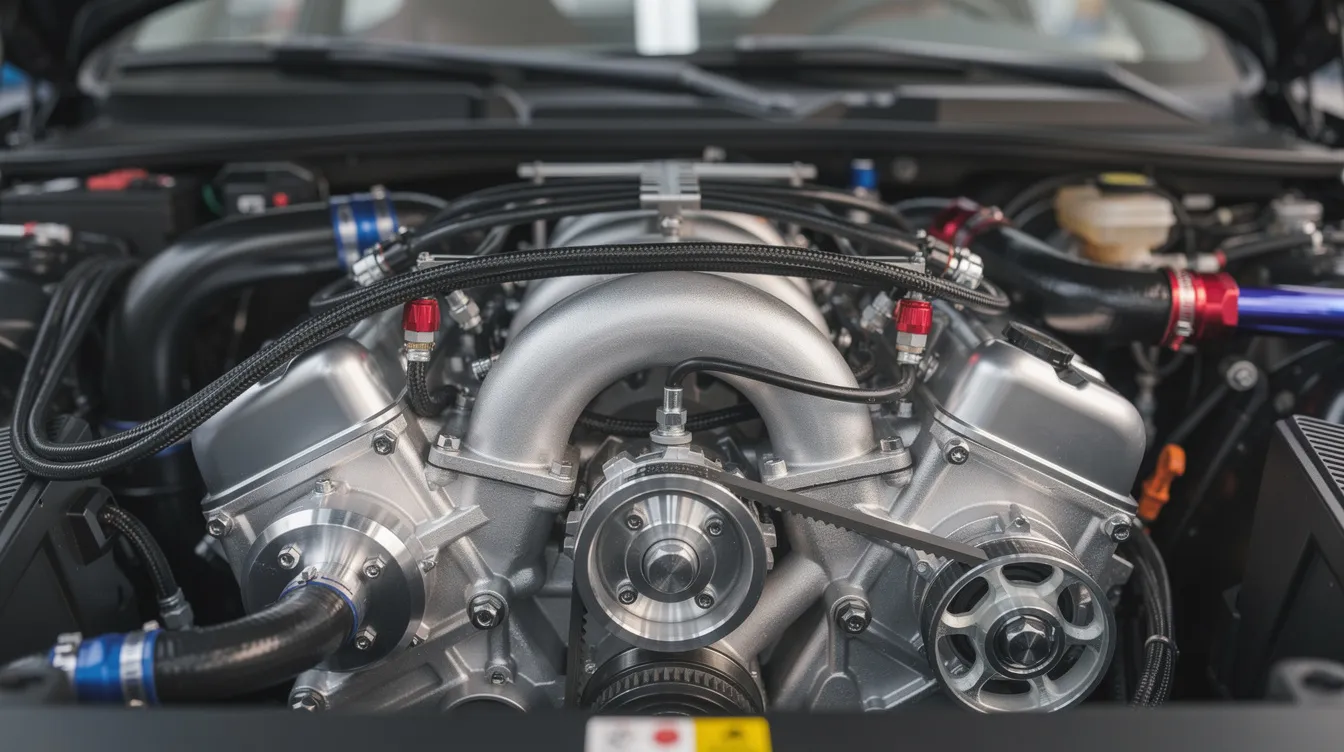
Air Oil Separator vs Catch Can: What's the Real Difference?
Both a catch can and an air oil separator intercept oil vapors in PCV and crankcase ventilation lines. The difference is what happens next.
- A catch can stores oil and water in a reservoir. It must be emptied on a schedule. If forgotten, problems can occur.
- Air Oil Separators (AOS) are designed to intercept oil vapors in the PCV system and return the collected fluid back to the engine, preventing the need for manual emptying.
- Unlike catch cans, which can fill with water due to condensation, AOS systems are designed to prevent large volumes of water from accumulating, as they continuously drain back into the oil pan.
- High-quality air oil separators often include a heating mechanism that prevents condensation, ensuring that the collected oil and water do not accumulate and negatively impact engine performance.
- High-quality AOS units often include a heating mechanism, such as engine coolant lines, to maintain optimal temperatures and prevent condensation, enhancing their efficiency in separating oil from air.
For daily-driven and boosted engines, an AOS system is usually the better long-term answer.
How an Air Oil Separator (AOS) Works
Crankcase gases leave the engine through a PCV valve, breather port, or valve cover port. They enter the AOS body before reaching the intake. Inside, air oil separators rely on principles like gravity, directional changes, centrifugal force, and coalescing filtration.
Baffles, mesh, or cyclone-style passages slow the air. Oil droplets hit surfaces, merge, and fall to the bottom of the canister. Cleaned air then returns to the intake, pre-turbo, or post-MAF path depending on the vehicle design.
Separated oil drains through a return line to the oil pan above the static oil level. Common fittings include hose barb straight, hose barb angled, angled 45° or 90° hose barb fittings, and sae quick connect female ends. Some kits use coolant lines around the body to keep the unit warm.
Research also supports the need for good separation. One study found that higher oil volatility raised blow-by aerosol mass up to five times, while advanced separators in heavy-duty engines can remove up to 99% of aerosol mass in certain tests (Springer, SAE).
Key Components and Plumbing: Hoses, Fittings, and Oil Pan Return
Here are the parts that matter before you order.
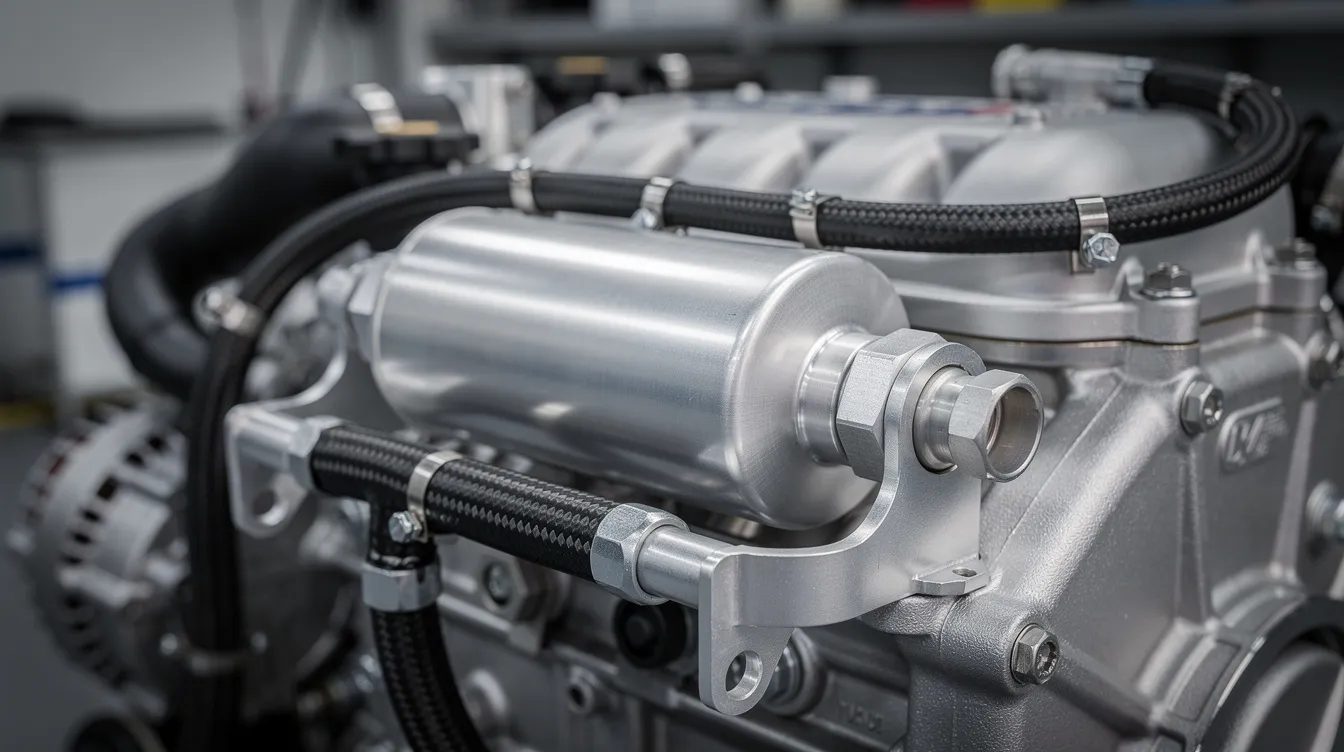
- AOS body: Usually aluminum or billet, located in the engine bay, with internal baffling and serviceable or sealed features.
- Oil return: A downhill line sends oil to the pan. Some kits include a dedicated oil pan fitting.
- Hose barb straight: Best for open space and short, direct hose runs.
- Hose barb angled: Useful near turbo housings, intercooler pipes, firewall areas, and tight intake plumbing.
- SAE quick connect female: A clean female fitting that can connect to factory hard lines with less cutting. Look for true sae compatibility.
- Coolant circuit: Coolant keeps the separator warm, helps prevent condensation, and lets oil stay fluid in low temperatures.
Good fittings protect against vacuum leaks. Poor routing can create restrictions, backflow, or leaks.
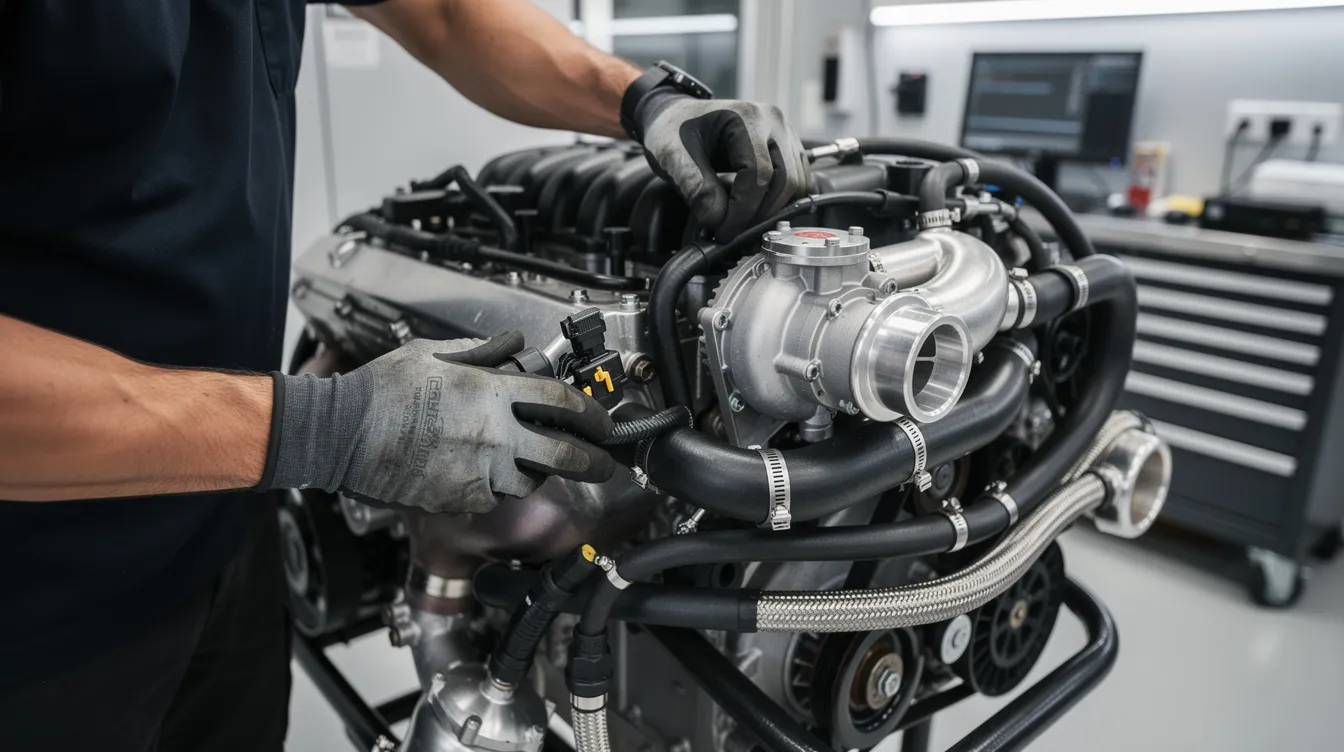
Applications: Daily Drivers, Performance Builds, and Subaru WRX
A stock daily driver can still benefit from an AOS. Less oil in the intake tract means cleaner intake valves, a cleaner intercooler, better fuel economy, and more stable response over time.
Performance cars create more blow-by under boost. Oil in the intake can lower effective octane and increase detonation potential. A high-capacity baffled unit can greatly improve performance consistency and protect power on hard pulls.
The subaru wrx, including many 2002–2024 wrx models, is a common AOS platform because turbo boxer layouts have tight PCV routing. Diesel trucks and work vehicles also benefit during towing, hauling, and long idle time.
Industrial uses matter too. An AOS captures oil from air compressor output before it exits the machine. Air oil separators protect industrial machinery and enhance system performance by capturing aerosolized oil. Oil-flooded air compressors require oil for lubrication, which results in oil mist in the output air. Eliminating oil mists prevents machinery blockages and reduces maintenance frequency. Air oil separators reduce overall oil consumption and minimize costly maintenance and repairs. Air oil separators can yield energy efficiency improvements for compressor motors of roughly 15% to 20%.
An oil separator extracts oil from hot refrigerant gas in HVAC systems to prevent pump failure. Delivering consistently oil-free air is critical for protecting the integrity of products in sensitive operations like pharmaceutical manufacturing and food processing.
Choosing the Right AOS: Price, Brands, and Categories in Our Shop
Start in the air oil separator AOS categories shop section on fabheavyparts.com. Products are organized by categories, vehicle family, and use case.
- Compare price brands carefully. Price usually reflects capacity, materials, brackets, coolant lines, hose barb kits, and SAE quick connect female hardware.
- Check availability, msrp, sold details, and whether the item usually ships quickly. Some high-demand kits ships faster than others.
- Choose fitment over the lowest price. This is especially true for boosted engines, work trucks, and long-distance road use.
- Keep future upgrades in mind. A bigger turbo, more boost, or track use may outgrow a small universal separator.
- Use your account to track order status and make sure the kit is not confused with unrelated parts like suspension components.
Installation Basics and Maintenance Tips
Most bolt-on AOS kits mount to existing engine bay brackets. They tie into PCV, breather, coolant, and return lines with basic hand tools.
Install time is often 1–3 hours. Compact turbo cars may need extra care. Avoid kinks, sharp edges, hot exhaust parts, and tight bends at hose barb angled fittings.
The oil return must flow downhill to the oil pan and enter above the oil level. Check hoses, clamps, the AOS body, and coolant warmth during normal maintenance. A good AOS rarely needs draining.
FAQ
Q1: Do I still need an oil catch can if I install an air oil separator?
A1: In most cases, no. A properly sized air oil separator already captures oil and returns it to the oil pan. A true AOS is usually recirculated into the intake rather than vented to the atmosphere, which is why most street vehicles do not also need a separate catch can. Some track-only builds may add extra breather or catch hardware, but running both without a plan can make routing worse.
Q2: Will an AOS void my vehicle warranty?
A2: In the United States, laws like the Magnuson-Moss Warranty Act generally require a dealer to prove the AOS caused the failure. Keep receipts, instructions, and choose bolt-on kits that do not require permanent changes to the engine block.
Q3: How does an AOS affect oil change intervals?
A3: An AOS does not replace oil changes. Follow your normal mileage or time interval. It can help oil stay cleaner between services, but towing, track days, winter short trips, and hard use may still require shorter intervals.
Q4: Is a coolant-heated AOS necessary in warm climates?
A4: In warm climates, a non-heated AOS can work well. A coolant-heated design simply gives more consistent control. The main benefit is reducing water condensation, especially during cold starts or short trips.
Q5: Can I install an AOS myself, or should I use a professional shop?
A5: Many owners can install a vehicle-specific kit with basic tools. The job gets harder when coolant lines or an oil pan return fitting are involved. If you are not comfortable opening the PCV system, use a professional shop. Loose connections can cause vacuum leaks, coolant loss, or poor performance.
Recommended Air Oil Separators at Fab Heavy Parts
1.
 Air Oil Separator 35843341 for Ingersoll Rand Air Compressor P100 P125 P150 P175 P175WJDU P185
Replace Part Number: P525697, 36845303, 35843341, 22402325, AS2266, P63A987, OS 5110, OS5110, 9576P525697, 03060712, 3060712, AS525697
Application: The Air Oil Separator fits for Ingersoll Rand Air Compressor:P100, P125, P150, P175, P175WJDU, P185
2.
 Air Oil Separator 3422012802 Fits for Airman Air Compressor
Part Number: 3422012802
Condition: New, aftermarket replacement
Function: Separates entrained oil from compressed air in the final stage of the compression cycle, returning recovered oil to the sump and delivering clean, dry compressed air to downstream equipment and tools in Airman rotary screw compressor applications
Note: Compatibility is provided for reference. Please verify against your part number before ordering.
The Air Oil Separator fits the Following Applications: Airman Air Compressor
3.
 Air Oil Separator 6.3795.0 for Kaeser Air Compressor M13 M13E M17 SM10 SM12 SM15 SM9
Replace Part Number: 6.3795.0, 637950
Application: The Air Oil Separator fits for Kaeser Air Compressor: M 13, M 13 E, M 15 New Model, M 17, SM 10, SM 12, SM 15, SM 7.5, SM 9, M 13 (GX 630), M 15 (GX 630), M 17 (GX 630)
4.
 Air Oil Separator 02250215-617 for Sullair Air Compressor
Replace Part Number: 02250215-617, 02250215617, 2250215-617, 2250215617
Application: The Air Oil Separator fits for Sullair Air Compressor
5.
 Air Oil Separator 2911006800 Replacement For Atlas Copco XAS 97 2911-0068-00
Part Number: 2911006800, 2911-0068-00
Applications: The Air Oil Separator fits for Atlas Copco XAS 97
Condition: new, aftermarket
FAB Heavy Parts: Your Trusted Engine Parts Supplier
Welcome to Fab Heavy Parts' online catalog, your trusted source for quality auto parts and tools. Explore our extensive selection of Air Oil Separators and more. Avoid delays by securing the parts you need from a reliable supplier who keeps inventory moving. Our expert team is here to provide personalized support, ensuring you get the right parts. Reach out today to stay ahead and keep your operations seamless!