


Introduction
Petrol injector cleaning is an essential maintenance task for car owners, DIY enthusiasts, and anyone considering professional vehicle service. This guide is designed for those who want to understand why petrol injector cleaning matters, how it impacts vehicle performance, and how it can help reduce long-term maintenance costs. Clean fuel injectors are crucial for optimal engine operation—fuel injector cleaners can help remove harmful deposits, prevent new deposits from forming, and enhance vehicle performance. Whether you’re looking to restore lost power, improve fuel economy, or avoid expensive repairs, this guide will walk you through everything you need to know about petrol injector cleaning.
Key Takeaways
- Petrol injector cleaning is one of the most effective ways to restore lost engine power and smooth out rough idling. Here’s what you need to know:
- Clean injectors can improve fuel economy by a few MPG when deposits have built up over time
- Most drivers notice symptoms like rough idle, hesitation, and higher fuel use between 30,000–60,000 miles if injectors have never been cleaned
- Three main cleaning methods exist: fuel-tank additives, on-car pressurized kits, and full removal with bench or ultrasonic cleaning
- Preventive cleaning every 6,000–10,000 miles costs far less than replacing injectors, which can run several hundred dollars for parts and labor
- Regular maintenance protects your entire fuel system and prevents mechanical issues down the road
- Fuel injector cleaners can help remove harmful deposits, prevent new deposits from forming, and enhance vehicle performance.
What Petrol Injectors Do and Why They Get Dirty
How Petrol Injectors Work
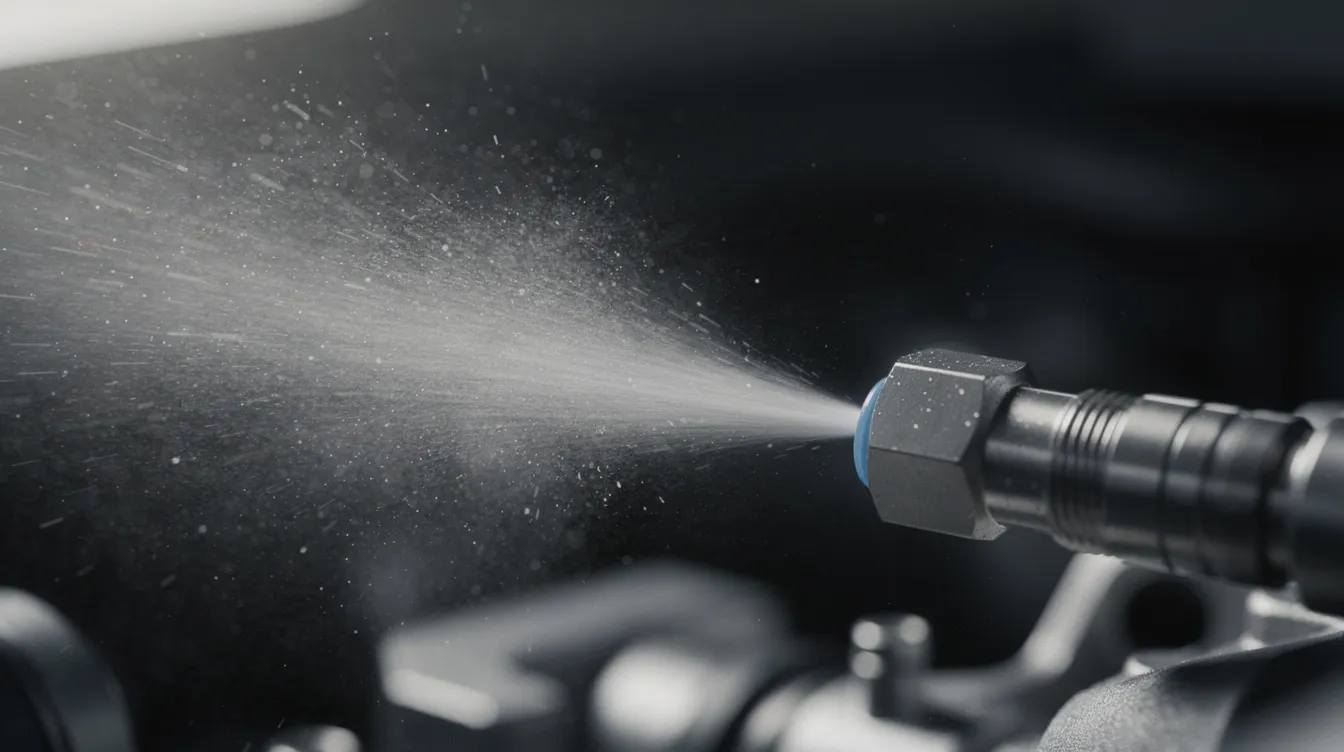
Fuel injectors are responsible for delivering the correct amount of fuel to the engine. Every petrol injector in your vehicle’s engine has one critical job: spray a fine mist of fuel into the intake port or combustion chamber at precisely the right moment. Your engine’s computer controls exactly how much fuel enters each engine’s cylinder based on throttle position, air intake, and engine load. This precise control allows modern gas powered engines to deliver more power while keeping emissions low.
Since the late 1990s, most petrol engines use multi-point fuel injection or direct injection instead of carburetors. Direct injection systems operate at pressures up to 200 bar—about 40 times higher than older port injection. That makes clean injectors even more critical for proper atomization.
Why Injectors Get Dirty
Over tens of thousands of miles, petrol leaves behind carbon deposits, varnish, and gums on injector tips. These harmful deposits form when hydrocarbons break down under heat. The tiny nozzle openings—often just 0.1 to 0.5 mm in diameter—can become partially blocked.
Ethanol-blended fuel like common E10 adds another challenge. Ethanol attracts moisture into the fuel tank, leading to corrosion and rust particles that contribute to clogging. Short trips, stop-and-go city driving, and low-detergent gasoline all accelerate deposit formation.
Common Symptoms of Clogged Petrol Injectors
No single symptom proves you have clogged fuel injectors. But several appearing together point strongly in that direction.
Watch for these warning signs:
- Rough idle at stoplights – uneven fuel distribution causes cylinder-to-cylinder imbalances
- Hesitation or stumbling when pulling away from a stop
- Flat spots during acceleration where throttle response lags
- Occasional misfires you can feel as a slight shudder
- Reduced fuel economy – for example, dropping from 30 MPG to 24–26 MPG over a few months without changing driving habits
-
Hard starts or extended cranking after the vehicle sits overnight, which can also indicate issues such as a defective fuel shut-off solenoid
- Check engine light with stored codes like P0300–P0304 (misfire codes) or lean/rich fuel trim issues
When your fuel injection system can’t deliver enough fuel consistently, your vehicle’s performance suffers across the board.
Causes of Petrol Injector Clogging
Fuel-Related Causes
Clogging develops gradually. Most internal combustion engine owners notice problems after 30,000–50,000 miles of regular use.
- Low-quality petrol with minimal detergents
- Contaminated station storage tanks harboring water or particles
- Old fuel oxidizing into gums in your fuel tank
Mechanical Causes
- Failing or clogged fuel filters allowing debris through
- Rust inside aging fuel lines or tank
- Degraded rubber components shedding particles
Direct-injection petrol engines are more sensitive because higher pressure amplifies deposit adhesion on valve and injector surfaces. Studies show up to 20–30% flow restriction in neglected injectors after 50,000 miles.
Ignoring basic maintenance—like air filters, spark plugs, and oil changes—makes things worse. Incomplete combustion creates more soot that recirculates through the engine, accelerating buildup.
Petrol Injector Cleaning Methods (Overview)
You have three main approaches to cleaning fuel injectors, each with different cost, effort, and effectiveness:
- In-tank fuel additives
- On-car pressurized kits
- Bench/ultrasonic cleaning
|
Method |
Cost |
Best For |
|
In-tank fuel additives |
$15–30 |
Prevention and light deposits |
|
On-car pressurized kits |
$100–350 |
Moderate clogging |
|
Bench/ultrasonic cleaning |
$120–500 |
Severe cases, high-mileage vehicles |
|
In-tank injector cleaners work well for maintenance and mild deposits. On-car and off-car cleaning tackle heavier buildup on long-neglected vehicles. Professional ultrasonic cleaning with flow testing restores spray pattern and balances flow between cylinders more reliably than chemical flushing alone. |
|
|
Some worn or electrically failed injectors cannot be saved by any cleaning process and must be replaced.
Cleaning Petrol Injectors Without Removal (Fuel Additives)
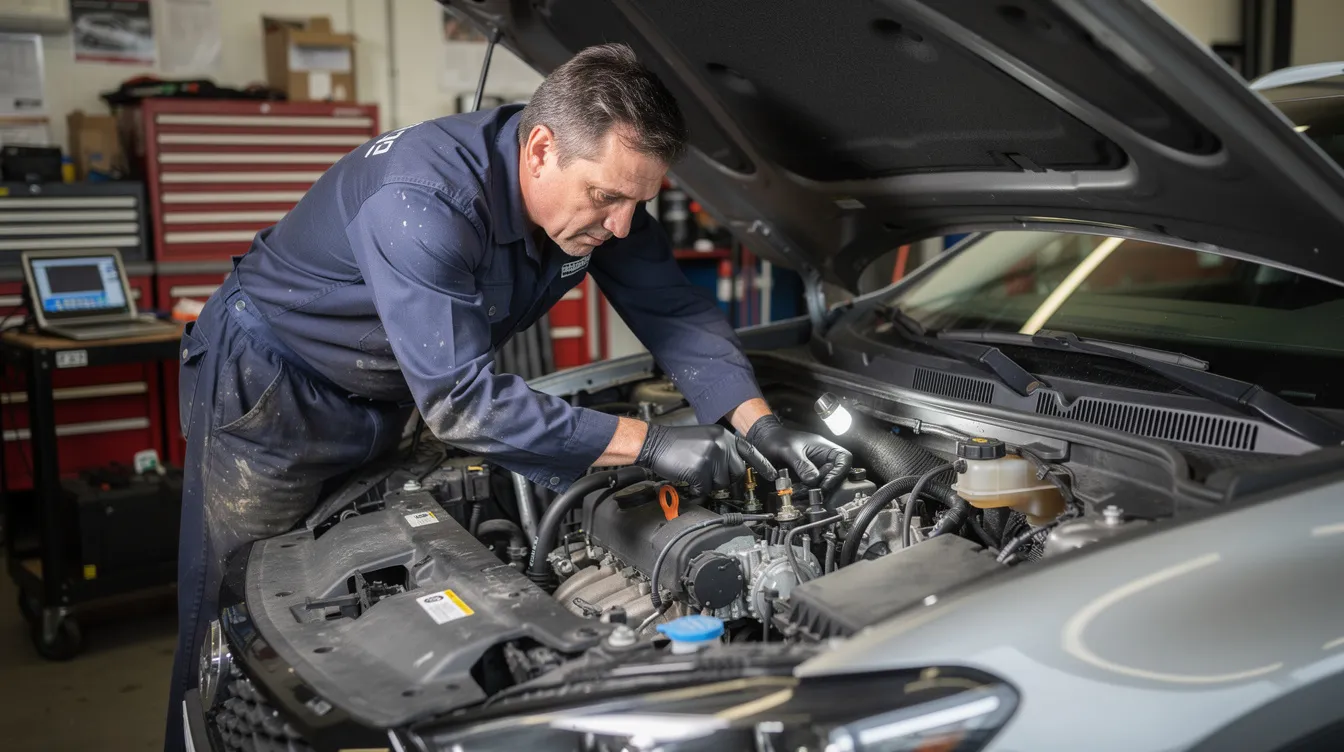
Fuel-tank additives offer the easiest DIY approach to injector cleaning. You don’t need specialized tools or mechanical experience.
Modern fuel injector cleaners use detergents like PEA (polyetheramine) to dissolve carbon on injector tips, intake valves, and inside fuel lines. Many injector cleaners work throughout your entire fuel system as you drive.
Here's the basic process:
- Run your fuel tank low (about 10–20% remaining).
- Pour the recommended amount of cleaner into the filler.
- Fill up with fresh petrol to get a full tank.
- Drive normally for 100–300 miles, mixing highway and city driving.
Typical dosage runs around 300–355 ml treating 50–70 liters of fuel. Always follow the product label.
The best fuel injector cleaners can remove deposits and restore better fuel economy in vehicles with light to moderate buildup. However, fuel injector cleaners work less effectively when an engine already has severe misfires or nearly blocked injectors. For heavy deposits, you’ll need a more aggressive cleaning process.
Cleaning Petrol Injectors With On-Car Pressurized Kits
Pressurized cleaning kits represent a middle step between simple fuel additives and full removal. Workshops use them regularly, and skilled DIYers can handle them too.
The kit uses a canister of concentrated cleaner connected directly to the fuel rail. You disable the vehicle’s fuel pumps so the engine runs only on the cleaning solution.
Main steps:
- Relieve fuel pressure through the Schrader valve or by running the engine with the pump disconnected.
- Disconnect the fuel pump fuse/relay or clamp return lines.
- Attach the kit hose to the fuel rail test port with the correct adapter.
- Set pressure to match your injection system (typically 45–55 psi for MPI).
- Start the engine and run at 2000–2500 RPM until the canister empties (15–30 minutes).
Safety matters. Work in a well-ventilated area. Keep all ignition sources away from the vehicle. Follow the kit manufacturer’s instructions exactly—pressures and connectors vary by vehicle.
This method removes heavier deposits and improves spray pattern more noticeably than a one-time tank additive. Many owners report 10–20% better throttle response after the cleaning process.
Cleaning Petrol Injectors After Removal (Bench and Ultrasonic)
Full removal is the most thorough approach. It’s common on high-mileage cars, commercial fleets, and performance builds where maximum flow matters.
The general process includes:
- Labeling and removing the fuel rail and injectors.
- Inspecting o rings, filter screens, and nozzle tips.
- Cleaning with pressurized solvent while cycling the injector electrically.
- Ultrasonic bath immersion for 10–30 minutes.
Ultrasonic cleaning uses high-frequency sound waves (25–40 kHz) in a heated liquid bath. The waves create microscopic cavitation bubbles that break apart deposits on internal and external surfaces. Case studies show high-mileage injectors regaining 80–95% of original spray pattern after ultrasonic treatment.
Professional services include before-and-after flow testing. They measure each injector's volume output and spray pattern, matching them within 3-5% variance. This ensures balanced fuel delivery across all cylinders.
DIY removal on some modern vehicles can be complex. Incorrect installation causes fuel leaks or engine damage. Many owners choose a qualified workshop for this level of work.
How Often Should You Clean Petrol Injectors?
There’s no one-size-fits-all interval. It depends on fuel quality, driving style, and engine design.
General preventive schedule:
- Use a quality petrol injector cleaner additive every 6,000–10,000 miles
- Or add it at each oil change for easy tracking
Clean more frequently if you have:
- A direct-injection engine
- A vehicle running high-ethanol blends
- Work trucks that idle for long periods
- Heavy-duty use including towing or dusty conditions
When you notice new roughness, lower MPG, or intermittent misfires, use a cleaner right away rather than waiting for a fixed mileage. If problems return quickly after cleaning, look deeper into related issues like weak pumps, dirty filters, or ignition faults causing incomplete combustion.
Costs: Cleaning vs. Replacing Petrol Injectors
Regular cleaning costs far less than replacing an entire set of injectors. Here’s what to expect:
|
Service |
Typical Cost (2025–2026) |
|
Quality fuel additive |
$15–30 per treatment |
|
On-car professional cleaning |
$150–350 |
|
Ultrasonic bench cleaning (per set) |
$120–300 |
|
New OEM injectors + labor |
$700–1,800+ |
|
Bench ultrasonic cleaning with flow testing often costs less than buying new OEM injectors, especially for V6 or V8 engines. Replacement injectors on modern petrol engines can cost several hundred to over a thousand dollars for parts and labor. |
|
Preventive cleaning avoids expensive downtime. It also prevents cascading damage from lean-running conditions that can harm valves, pistons, and other parts.
Keeping Your Petrol Injectors Clean Long-Term
Best Practices for Injector Maintenance
Injector cleanliness connects directly to overall engine health and vehicle uptime. This matters whether you’re driving a daily commuter or running a fleet of work vehicles.
Build these habits:
- Use quality gasoline with adequate detergent levels
- Avoid running the tank nearly empty—this pulls sediment toward the fuel lines
- Follow your vehicle manufacturer’s service schedule
- Replace fuel filters on time (typically every 30,000–50,000 miles)
- Check spark plugs and change engine oil and air filters regularly
Special Considerations for Heavy Use
Vehicles that tow, haul heavy loads, or operate in dusty conditions benefit from more frequent inspections of fuel system components and air intake systems.
Planned maintenance beats emergency repairs every time. A little attention to your fuel injectors now prevents bigger problems—and bigger bills—later.
FAQ
Q1: Can petrol injector cleaner fix a completely dead injector?
A1: Chemical cleaners remove deposits but cannot repair failed injector coils, broken nozzles, or severe internal wear. If an injector doesn’t click when you apply 12V during testing, or if resistance falls outside the 12–16 ohm range, it needs replacement. Cleaning only works when the injector's electrical and mechanical components still function.
Q2: Will using injector cleaner damage my engine?
A2: Reputable cleaners used at correct dosage are safe for most petrol engines and won’t harm fuel system components. Problems arise from overdosing, mixing multiple products, or using diesel fuel additives in gasoline engines. Always follow the label instructions and your vehicle manual to avoid harmful effects.
Q3: How long does it take to feel a difference after cleaning?
A3: In-tank additives may take one full tank or a few hundred miles of mixed driving before you notice smoother idling and better throttle response. Pressurized or bench cleaning can produce immediate improvements if dirty injectors were the main problem affecting your vehicle’s performance.
Q4: Do I still need injector cleaning if I always buy premium fuel?
A4: High-quality fuels have more detergents and slow deposit buildup significantly—AAA tests show up to 60% less accumulation. But they don’t completely prevent deposits. Periodic cleaning remains worthwhile, especially as engines age past 60,000–80,000 miles and new deposits continue forming.
Q5: Is petrol injector cleaning worth it on an older high-mileage car?
A5: For many vehicles with 100,000+ miles, proper cleaning restores lost performance and improves drivability enough to delay expensive replacement. However, consider the condition of other systems—ignition, compression, and fuel pumps—before investing heavily in cleaning. Sometimes multiple issues contribute to poor performance, and addressing only one won’t solve everything.
Popular Fuel Injectors at Fab Heavy Parts
1.
 Fuel Injector 173-4647 1734647 Fits for Caterpillar CAT Engine 3126
Part Number: CA1734647, 173-4647, 1734647
Engine: The Fuel Injector fits for Caterpillar 3126
2.

Part Number: 15271-53000, 1527153000
Application: The Fuel Injector fits for Kubota Engine: D750, D850, D950, D1302, D1402, V1702, V1902; Kubota Tractor:L185, L245, L2050, L295, L2350, L235, L185DT, L185F, L2050DT, L2050F, L235, L2350DT, L2350F, L245DT, L245F, L245H, L275, L295DT, L295F, L305DT, L305F, L175
3.
 Fuel Injector 8-97148-960-1 8971489601 8-97148-961-1 For Isuzu 4.8L 4HE1 NPR NQR NPR-HD ENCAVA
Condition: new, aftermarket
Part number: 8-97148-960-1, 8971489601, 8-97148-961-1, GM 97148960, 48-3673M, 48-4510M
Applications: The Fuel Injector fits for Isuzu 4.8L 4HE1 NPR NQR NPR-HD ENCAVA
This Fuel Injector is a reliable and high-performance replacement for Isuzu 4.8L 4HE1 NPR NQR NPR-HD ENCAVA engines. It runs on maximum pressure and efficiency, ensuring optimal fuel economy and smooth engine operations.
4.
 Fuel Injector 3054228 Fits for Cummins Engine NT855 N14 NH855 VTA1710 NTA855
Condition: New, aftermarket
Replace Part Number: 3054228, 3047969, 3018353, 3009516, 3030447, 3017462, 3018352, 3009467, 3054228PX, R-3054228, R3054228, DS-3054228, DS3054228, 3054228RX
Fit For Cummins Engine: The Fuel Injector fits for NT855, N14 MECHANICAL, VTA-1710, NH855, NTC400, NT855-G4, NTA855
5.
 Fuel Injector 23670-E0400 Fits for Hino Engine J08E Truck 500 Series
Condition: Remanufactured
Replace Part Number: 23670-E0400, 23670E0400, 295050-0231, 295050-0232, 295050-0233,
295050-0234, 295050-0235, 295050-0236, 295050-0237, 295050-0238, 295050-0239, 2950500231, 2950500232, 2950500233, 2950500234, 2950500235, 2950500236, 2950500237, 2950500238, 2950500239
Fits for Hino Engine: J08E
Application: The Fuel Injector fits for Hino Truck: 500 Series; Kobelco Excavator: SK330-8, SK350-8, SK360-8, SK200-8, SK210-8, SK250-8
6.
 Fuel Injector 04132013 Fits for Deutz Engine TD2.9 D2.9L4
Condition: New, aftermarket
Replace Part Number: 04132013, 0413 2013, 4132013
Fits for Deutz Engine: The Fuel Injector fits for TD2.9, D 2.9 L4
FAB Heavy Parts: Your Trusted Engine Parts Supplier
Welcome to Fab Heavy Parts' online catalog, your trusted source for quality auto parts and tools. Explore our extensive selection of Fuel Injectors and more. Avoid delays by securing the parts you need from a reliable supplier who keeps inventory moving. Our expert team is here to provide personalized support, ensuring you get the right parts. Reach out today to stay ahead and keep your operations seamless!