


Key Takeaways
Wiring harnesses are the protected bundles of electrical wires, connectors, and coverings that send electrical power and signals through a machine or truck. This guide covers the basics, design, maintenance, and replacement of wiring harnesses, providing a comprehensive resource for heavy equipment owners, fleet managers, and technicians. Understanding wiring harnesses is crucial for reducing downtime, improving safety, and lowering operational costs in demanding environments. Whether you manage a fleet, operate heavy machinery, or perform repairs, mastering the essentials of wiring harnesses helps keep your equipment running reliably and efficiently.
- Good harness design prevents downtime, electrical fires, and hard-to-find shorts in heavy equipment
- Modern harnesses are engineered with 3D tools, tested for tough conditions, and can be custom wiring harness built for specific machines
- A single haul truck or wheel loader can contain several kilometers of wiring when fully extended
- Regular inspection helps you catch problems before they stop your machine
- Fab Heavy Parts can help source replacement harnesses and upgrade old or damaged harnesses on construction machinery and mining equipment
What Is a Wiring Harness?
A wiring harness is an assembly of electrical cables or wires that transmit signals or electrical power, bound together by materials such as rubber, vinyl, or electrical tape. The components of a wiring harness typically include connectors, terminals, clamps, sheaths, and the core electrical wires, which work together to ensure reliable electrical connections.
A wiring harness is a group of electrical wires, electrical cables, terminals, connectors, and protective coverings bundled together to carry power and signals throughout a machine. It’s the cable assembly that connects your battery and ECM to starters, sensors, lights, and cab controls.
Think of it like a combination of your machine’s nervous system and blood vessels. Instead of running many wires loosely throughout a vehicle, a harness keeps cables organized in a single cable bundle with labeled connectors for easier service.
Common materials include copper or aluminum conductors with PVC or cross-linked polyethylene insulation. Protective elements like corrugated conduit, braided sleeves, and heat-shrink tubing shield against vibrations, moisture, and abrasion.
- A typical large wheel loader, haul truck, or highway tractor can contain 5,000 to 10,000 feet of wiring across multiple harness sections, particularly on complex Caterpillar graders, loaders, and excavators
In a 40-ton excavator, harnesses run from the engine bay through the cab and down the boom. Every injector pulse, sensor reading, and warning light depends on these wiring assembly pathways operating without interruption, just as reliable harnesses and components support Caterpillar 950H loader replacement parts in demanding construction work.
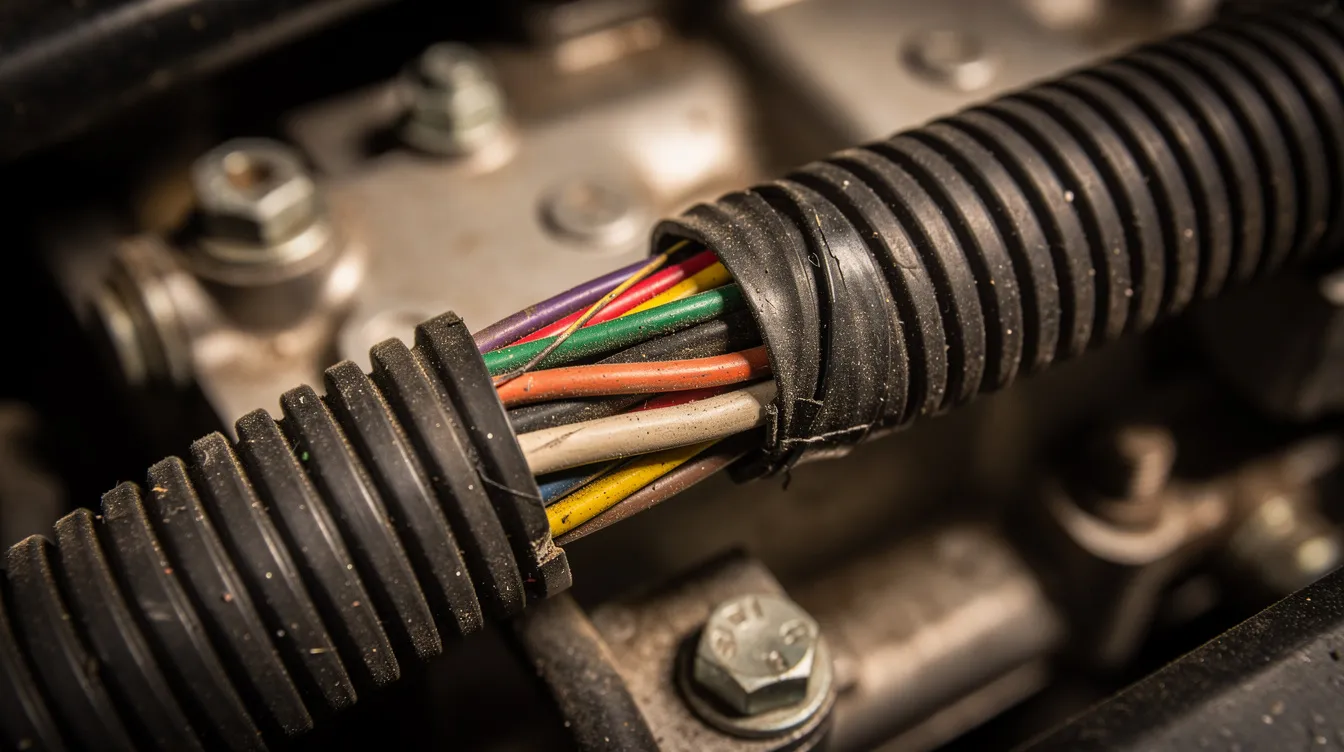
Why Wiring Harness Matter in Heavy Equipment
Harness reliability ties directly to uptime. For fleets and owner-operators, unreliable electrical components account for up to 30% of electrical downtime. That translates to real money lost every hour a machine sits idle.
A well-designed cable harness reduces:
- Risk of short circuits and electrical fires in hot engine bays
- Damage from vibrations, rocks, and hydraulic oil exposure
- Mis-plugged connectors during repairs or rebuilds
- Installation time at the factory and troubleshooting time in the field
Here’s a common failure: a frame rail harness on a dump truck rubs through from constant flexing, causing intermittent no-starts and blown fuses. The solution? Better routing with abrasion-resistant sleeves and secure clamps, along with dependable Cummins B3.3 engine components where applicable. Less downtime, lower total cost of ownership.
Fab Heavy Parts focuses on environments that punish wiring harnesses hardest—construction sites, quarries, mines, agricultural fields, and winter road work where salt and moisture create the adverse effects that destroy unprotected wiring, and also supplies industrial and automotive parts, tools, and equipment to keep that machinery running.
How a Wiring Harness Is Designed and Built
Design starts on a computer, then moves to cutting, crimping, and assembly at the harness shop. Modern electrical engineering relies on precision at every step.
Design steps:
- Engineers create 2D schematic diagrams and 3D routing using CAD software
- Wire gauge is matched to load—10-12 AWG for starters carrying high current, 18-22 AWG for sensors at milliamps
- Protective coverings are selected based on heat, oil, and abrasion requirements
Manufacturing process:
- Wires are cut to length and stripped by automated machines
- Terminals are crimped (and sometimes soldered) to wire ends
- Branches are taped or loomed together using binding materials into a non flexing bundle where needed
- Connectors, labels, and clips are added in final assembly
Every harness is tested on a continuity board at operational voltages (12V or 24V systems) to check for shorts, opens, and correct pin-outs. Many shops store digital build files so a harness can be manufactured years later for the same machine model—critical for older mining fleets.
Types of Wiring Harnesses Used in Trucks and Heavy Machinery
A single machine can have multiple variants of harnesses, each doing a specific job. While designers might specify only one harness for simple equipment, larger machines commonly use five to ten specialized harness sections.
- Engine harness: Runs to injectors, sensors, alternator, and starter. Handles common-rail diesel signals and emissions components in modern Tier 4 Final systems and supports engines like those using Hino J08E engine parts.
- Cab or dash harness: Powers gauges, displays, HVAC controls, safety lights, and integrated telematics units for data transmission.
- Chassis harness: Feeds work lights, ABS modulators, ride-height sensors, and trailer connectors along frame rails, and may also integrate accessories such as truck running boards and related hardware.
- Transmission harness: Handles shift solenoids, speed sensors, and temperature sensors in automatic or powershift gearboxes.
- Specialty harnesses: Camera systems, plow controls, auxiliary hydraulics, and aftermarket telematics that connect to core machine systems, often tied into Kubota and other heavy machinery replacement parts.
Fab Heavy Parts often helps customers identify which harness has failed by symptoms. “No gauge cluster” points to cab wiring. “No crank” suggests starter circuits. This detail matters when you need a perfect fit replacement.
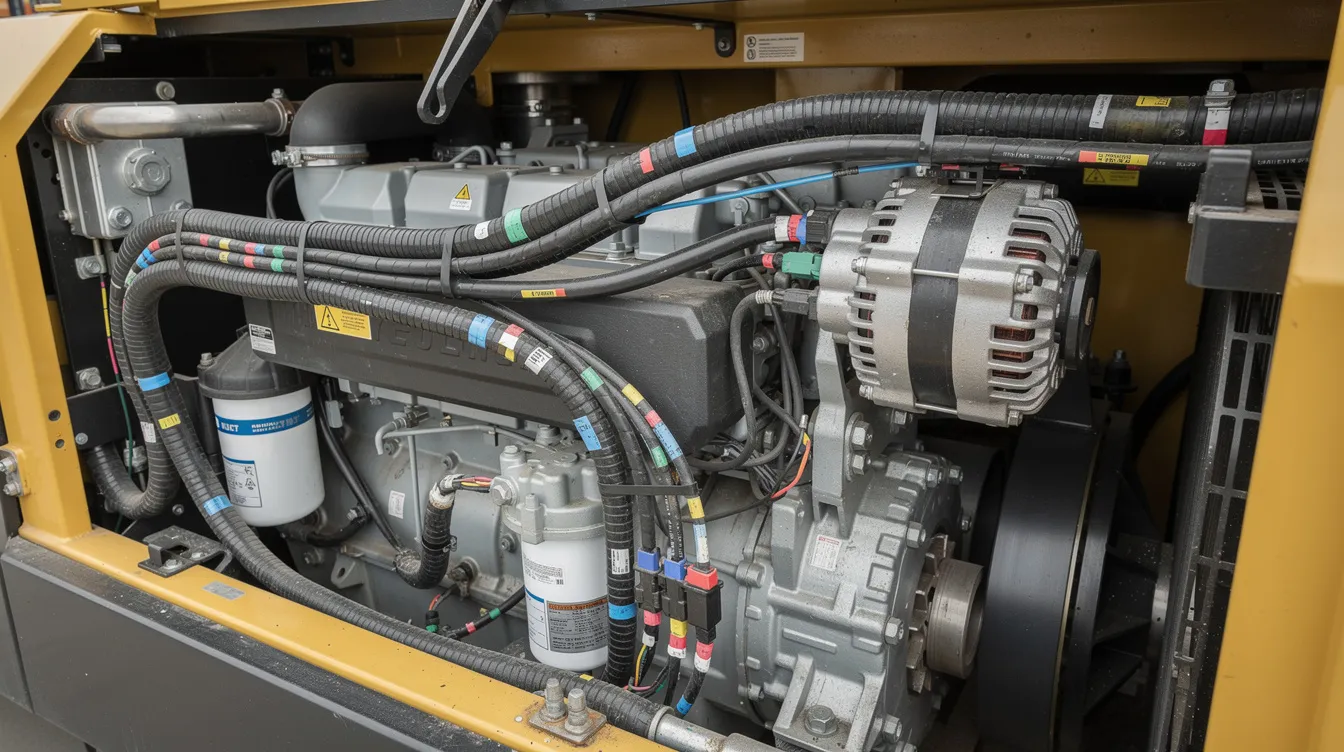
Common Wiring Harness Problems in the Field
Harsh conditions eventually wear harnesses out. Construction machines and haul trucks operate in dust, extreme temperatures, and constant vibrations that take a time consuming toll on even quality wiring and critical automotive solenoid coils and related components.
Common failure modes include:
- Insulation rubbed through: Metal edges cause chafing that leads to shorts or blown fuses. Commonly seen on wheel loader bucket pins and frame rails.
- Cracked connectors: UV, heat, and impact crack housings. Loose or corroded pins follow. Trailer pigtails are frequent victims.
- Moisture intrusion: Breached seals let water in. Green corrosion forms inside terminals, causing slow sensor failures. Common in humid mines.
- Melted sections: Missing heat shields or damaged loom let harness sections touch exhaust components. Fire risk increases.
- Rodent damage: Soy-based insulation attracts rodents on parked or seasonal equipment. Severed circuits result.
Improper previous repairs—twist-and-tape fixes using wrong gauge wire or non-sealed butt connectors—create bigger issues later. These problems connect directly to the need for quality replacement harnesses and proper installation practices.
How to Spot Wiring Harness Issues Before They Stop Your Machine
Proactive checks during regular service beat emergency repairs every time. A few minutes of inspection can save hours of diagnostic work.
Practical inspection tips:
- Look for chafed loom, exposed copper, or flattened harness sections along frame rails and moving joints
- Check connectors near the ground for broken locks, missing seals, or green/white corrosion
- Gently wiggle suspect connectors with the key on—watch if warning lights flicker or the engine stumbles
- Use a simple multimeter or test light to confirm power, ground, and continuity at accessible connectors
Do a visual harness inspection whenever fluids are changed or the machine is on a lift. Focus on areas with high heat and movement. The process takes pride in prevention over reaction.
Reading fault codes with a scan tool can narrow the search to a specific circuit before you access the harness physically. Modern machines with automation systems often provide signals pointing to the problem area, just as precision is vital when checking crankshaft and connecting rod bearing sizes during engine diagnostics.
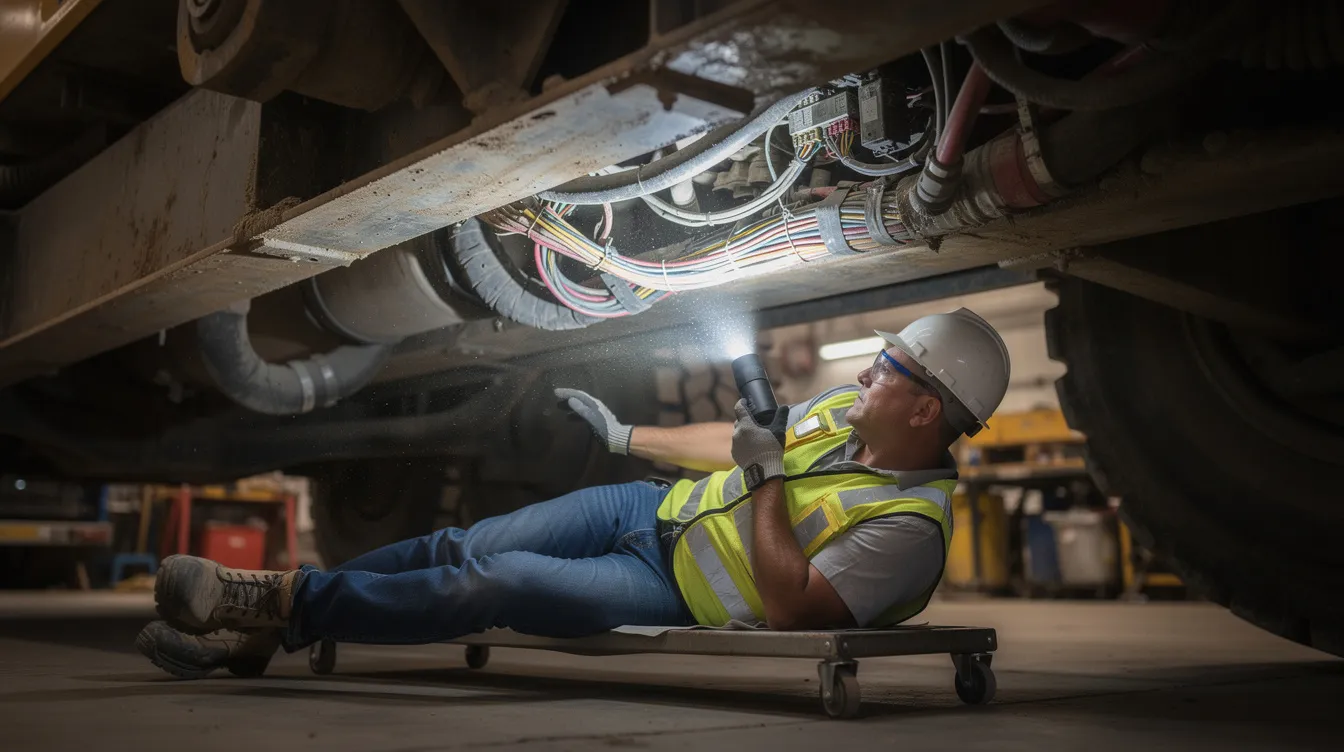
Repairing vs. Replacing a Wiring Harness
Not every issue requires full replacement. But patching everything is risky too.
Local repair makes sense when:
- Damage is isolated in an otherwise healthy harness
- The location is easily accessible
- No signs of widespread corrosion or rodent damage exist
Full or partial replacement is smarter when:
- Multiple splices already exist in the same area
- Melted or oil-soaked sections extend over long distances
- Critical safety circuits (brakes, lights, engine shutdown) show repeated failures
Best-practice repair methods: When you’re rebuilding engines or addressing deeper issues alongside harness work, consider sourcing parts from a trusted Shibaura engine overhaul parts supplier.
- Use correct gauge wire and matching colors where possible
- Apply sealed heat-shrink butt connectors or solder plus adhesive heat-shrink
- Re-wrap with quality loom or tape and secure away from moving parts
- Test for continuity before closing everything up
Fab Heavy Parts helps customers source OEM-style harnesses or high-quality aftermarket options that match original connectors and form. Hand assembled or machine-produced, the goal is seamless integration with your existing machine systems.
Choosing the Right Replacement Harness with Fab Heavy Parts
Fab Heavy Parts works as a partner for fleets, dealers, and independent shops needing dependable harness solutions. The company operates with straightforward, practical service focused on keeping equipment earning money.
Gather this information before ordering: The same attention to detail applies when selecting Yanmar 3T84 engine parts for heavy equipment.
- Exact machine make, model, and year (e.g., 2019 CAT 980M or 2022 Kenworth T880)
- Engine model and emission level (Tier 4 Final, Stage V)
- Current harness part number from tags or service manuals
- Symptoms and location of failure (engine bay, cab, frame)
What Fab Heavy Parts can do: Reach out to our contact and support team for ordering assistance if you’re unsure which harness solution fits your machine.
- Cross-reference old or superseded part numbers for obsolete models
- Help identify harness sections from photos and machine diagrams
- Recommend upgraded materials if the original design had known weak points
- Provide automobiles and heavy equipment harness options that are easily standardized across your fleet, supported by proven customer-reviewed heavy equipment parts service
Future Trends in Wiring Harnesses for Heavy Equipment
Wiring harnesses are changing as machines add more electronics and development moves toward greater automation and electrification.
Key trends to watch:
- CAN bus and Ethernet networks: These reduce total wire count by up to 70% compared to point-to-point wiring, while increasing data-rate demands for modern telematics
- Aluminum conductors: Growing usage on large haul trucks cuts weight by 50% compared to copper, offering advantages in fuel efficiency
- Integrated sensors: Real-time health monitoring built into main harnesses enables predictive maintenance through telematics
Machines built after 2026 will likely feature more modular harness sections for faster replacement. An installer might complete a swap in two hours instead of days.
Companies like Fab Heavy Parts stay current with these changes through developing relationships with harness manufacturers. This ensures replacement harnesses remain compatible with newer electronics and diagnostic tools as the project of modernization continues.
FAQ
Q1: How long does a wiring harness usually last on heavy equipment?
A1: A well-designed harness on modern construction machinery can last 10–15 years or 10,000–20,000 operating hours in normal usage. Machines working in mines, salt environments, or extreme heat may see issues much sooner due to accelerated corrosion and abrasion. Start watching older machines—over 8–10 years or 10,000+ hours—for recurring electrical problems that point to harness aging. Regular cleaning, securing loose sections, and fixing small rubs early can add space for several more years of reliable operation.
Q2: Can I install a new wiring harness myself, or do I need a shop?
A2: Skilled technicians and experienced DIY owners can install a harness with proper tools, time, and wiring diagrams. Large harnesses require removing interior panels, routing through tight space, and carefully matching connectors and clips. Fleet owners with limited electrical experience often save money long-term by having a qualified shop handle major harness work. Take clear photos of old routing before removal and label similar connectors to prevent mix-ups.
Q3: What tools do I need to work on wiring harnesses safely?
A3: Basic tools include a digital multimeter, quality wire strippers, crimpers matched to your terminals, heat-shrink tubing, and proper electrical tape or loom. Use sealed heat-shrink connectors and avoid household wire nuts in exposed areas. Always disconnect battery power and follow lockout/tagout procedures before opening harnesses. A service manual or OEM schematic is just as important as physical tools for avoiding mistakes.
Q4: How do I tell if a wiring issue is in the harness or in a component like a sensor?
A4: Swap a suspected sensor with a known good one. If the fault stays in the same location, the harness is more likely the cause. Use a multimeter to check for power, ground, and signal continuity at the connector with the component unplugged. Wiggle the harness while watching a meter or scan tool—if readings jump or drop, the wiring is suspect. Repeated failures of the same electrical component often indicate the real problem is the harness feeding it.
Popular Wiring Harnesses at Fab Heavy Parts
1.
 External Wiring Harness 20Y-06-31611 Fits for Komatsu Excavator PC200-7 PC200LC-7 PC220-7 PC270-7
Replace Part Number: 20Y-06-31611, 20Y0631611
Condition: new, aftermarket
Applications: The Wiring Harness fits for Komatsu Excavator: PC200-7, PC200-7-AA, PC200-7-AP, PC200LC-7, PC270LL-7L; Komatsu Drilling Rig: BP500-7-M1...
2.
 Original Electronic Control Module Wiring Harness 4022870 Fits for Cummins ISM QSM M11
Part Number: 4022870
Applications: The Wiring Harness fits for Cummins Engine: ISM QSM M11
Condition: new, Original
3.
 Wiring Harness 243-1069 2431069 Fits for Caterpillar CAT Truck Engine C15
Part Number: 243-1069, 2431069, CA2431069
Application: The Wiring Harness is compatible with Caterpillar CAT Truck Engine C15
Condition: new, aftermarket
Fitment: C15 On-Highway Truck MXS00001-UP
4.
 Wiring Harness 8973321332 for Isuzu 4HK1 Engine Hitachi ZX240-3 Excavator
Part Number: 8973321332
Applications: The Wiring Harness fits for Excavator: Hitachi ZX240-3; Engine: Isuzu 4HK1
Condition: new, aftermarket
5.

Replace Part Number: 7143071
Application: The Wiring Harness is Aftermarket Replacement For Bobcat All Wheel Steer Loaders: A330; Bobcat Skid Steer Loaders:S130, S150, S160, S175, S185, S205, S220, S250, S300, S330; Bobcat Track Loaders: T140, T180, T190, T250, T300, T320
Condition: new, aftermarket
6.
 Wiring Harness CB11495584 Fits for John Deere Engine 6090 6068 Harvester 3520 3522 CH330 CH530
Part Number: CB11495584
Condition: New, aftermarket replacement
Function: Engine and machine electrical interconnection, sensor signal routing, and power distribution management
The Wiring Harness fits for John Deere Engine Models: 6068HT802, 6090HNW01, 6090HT803, 6090HT804, 9.0L; John Deere Harvester Models: 3520, 3522, CH330, CH530
FAB Heavy Parts: Your Trusted Engine Parts Supplier
Welcome to Fab Heavy Parts' online catalog, your trusted source for quality auto parts and tools. Explore our extensive selection of Wiring Harnesses and more. Avoid delays by securing the parts you need from a reliable supplier who keeps inventory moving. Our expert team is here to provide personalized support, ensuring you get the right parts. Reach out today to stay ahead and keep your operations seamless!