


A bad water pump can turn a normal workday into downtime fast. This guide is for owner-operators, technicians, fleet managers, and vehicle owners who want to recognize the warning signs early and avoid expensive downtime or repairs. The water pump is a vital component in your cooling system, and when the pump is failing, heat builds quickly. Here’s how to spot the symptoms bad water pump issues create before they lead to costly repairs.
Key Takeaways
- Coolant leaks and temperature gauge spikes are often the first signs of water pump failure.
- An overheating engine, unusual noises, corrosion around the pump, and low coolant level all need quick attention.
- Running a truck, machine, or car’s water pump while it is failing can cause severe engine damage, a blown head gasket, warped cylinder heads, or even a seized engine.
- Fab Heavy Parts supplies quality water pump replacement options and cooling system components for trucks and heavy equipment.
What Does a Water Pump Do in Your Engine?
A properly functioning water pump circulates coolant through the radiator, engine block, cylinder head, and coolant passages to keep the engine cool. It pushes coolant away from hot internal components and back to the radiator so heat can leave the system.
Most light vehicles use a serpentine belt or timing belt, while many heavy-duty engines use gear-driven pumps or a water pump belt with a belt connected to the front drive. If the water pump fails, coolant circulation slows or stops, engine temperature rises, and the engine overheats. In heavy equipment, that can mean expensive repairs plus lost productivity.
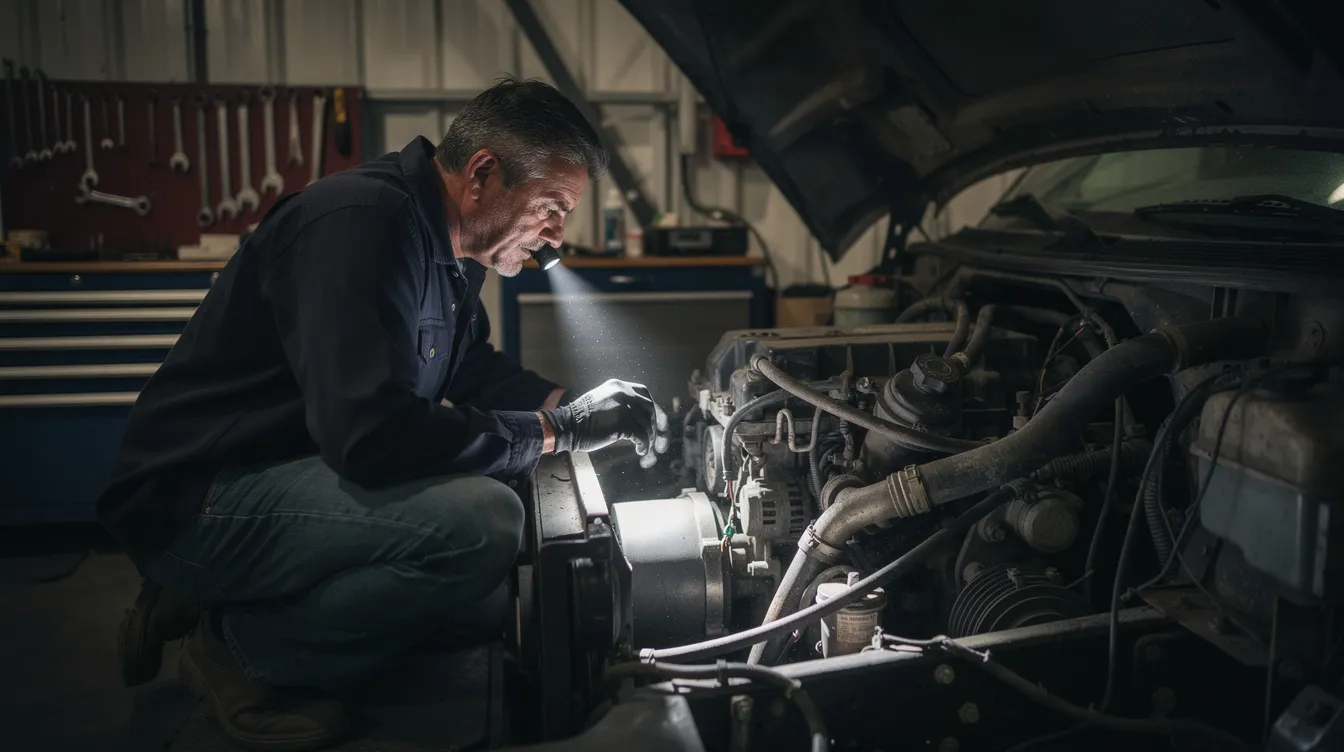
Most Common Symptoms of a Bad Water Pump
One symptom alone may not prove the pump is bad. But two or more signs together usually point to a malfunctioning water pump or another vehicle’s cooling system problem.
The most common symptoms of a faulty vehicle water pump include engine overheating, coolant leaks, and high-pitched whining noises from the engine bay.
Coolant Leak Around the Pump
Coolant leaks around the water pump are one of the earliest warnings. Common coolant leak colors include green, pink, orange, or red fluid pooling under the front-center of the vehicle due to failing gaskets or seals.
If you notice a puddle of brightly colored coolant-green, orange, or pink-under the front of your vehicle, it may indicate a coolant leak from the water pump. Coolant leaks commonly happen because the gaskets and seals in the water pump wear out, allowing coolant to escape. This leakage can lead to the engine overheating if not addressed promptly.
Look for visible leaks, coolant stains, and dried crust near the pump housing, engine block, bolts, and around the pump. Weep hole drips are small, slow leaks that can occur at the bottom of the pump casing as a symptom of failure. On heavy machines, shields may hide leaks, so have the vehicle inspected.
Overheating Engine and Temperature Spikes
An overheating engine is one of the most serious signs of a failing water pump. An overheating engine is indicated by a temperature gauge that climbs into the red zone or fluctuates erratically when coolant is not circulating properly.
If the pump is not circulating coolant properly, it cannot circulate coolant effectively or maintain optimal temperature. If the water pump begins to fail, it may not move coolant efficiently, causing the engine to overheat, which can result in costly repairs.
Overheating is a serious issue that can lead to permanent engine damage if not addressed quickly, including a blown head gasket or cracked engine block. The water pump plays a crucial role in engine performance because if it fails, the engine can overheat, leading to serious problems like warped cylinder heads, blown gaskets, or even a seized engine.
Unusual Noises from the Front of the Engine
Unusual noises such as grinding, whining, or squealing can be caused by a loose or worn-out water pump pulley or failing bearings inside the pump. A high-pitched whining or squealing noise coming from the front of the engine often signals a problem with the water pump pulley or worn bearings, and this noise typically worsens as the bearings continue to degrade.
A high-pitched sound coming from the front of the vehicle, especially when accelerating, may indicate worn-out water pump bearings or a misaligned pulley. Listen for noise that changes with engine speed, and if you hear unusual noises, check for pulley movement. Visible wobbling in the pump pulley wheel can indicate serious issues with the water pump’s integrity.
Steam or Smoke from the Radiator Area
Steam rising from the radiator indicates that coolant has reached a boiling point due to overheating. Steam or white smoke rising from under the hood is a clear indication that the engine is overheating, often caused by a failing water pump.
If you see steam or smoke coming from under your hood, it’s a clear sign your engine is overheating—often due to a water pump problem that requires immediate attention. When the water pump stops working properly, coolant flow slows or stops altogether, causing heat to build up in the engine and resulting in steam or smoke escaping from the radiator area or beneath the hood.
Shut down safely. Do not remove a hot radiator cap.
Corrosion, Rust, or Deposit Build-Up Around the Pump
Corrosion, rust, or white crusty residue forms on the water pump housing as a sign of wear or failure. Corrosion and deposit build-up on the water pump can occur due to minor leaks, leading to rust-colored streaks or crusty white residue around the pump.
Corrosion can weaken the metal of the water pump, which may stop it from working properly, while mineral deposits can obstruct coolant flow, lowering the cooling system’s overall efficiency.Mineral build up also lowers the pump’s efficiency and can hide small cracks.
Regular maintenance and inspections can help identify signs of corrosion and deposit build-up early, preventing further damage to the water pump and ensuring the longevity of the cooling system.
Chronic Low Coolant Levels Without Obvious Leaks
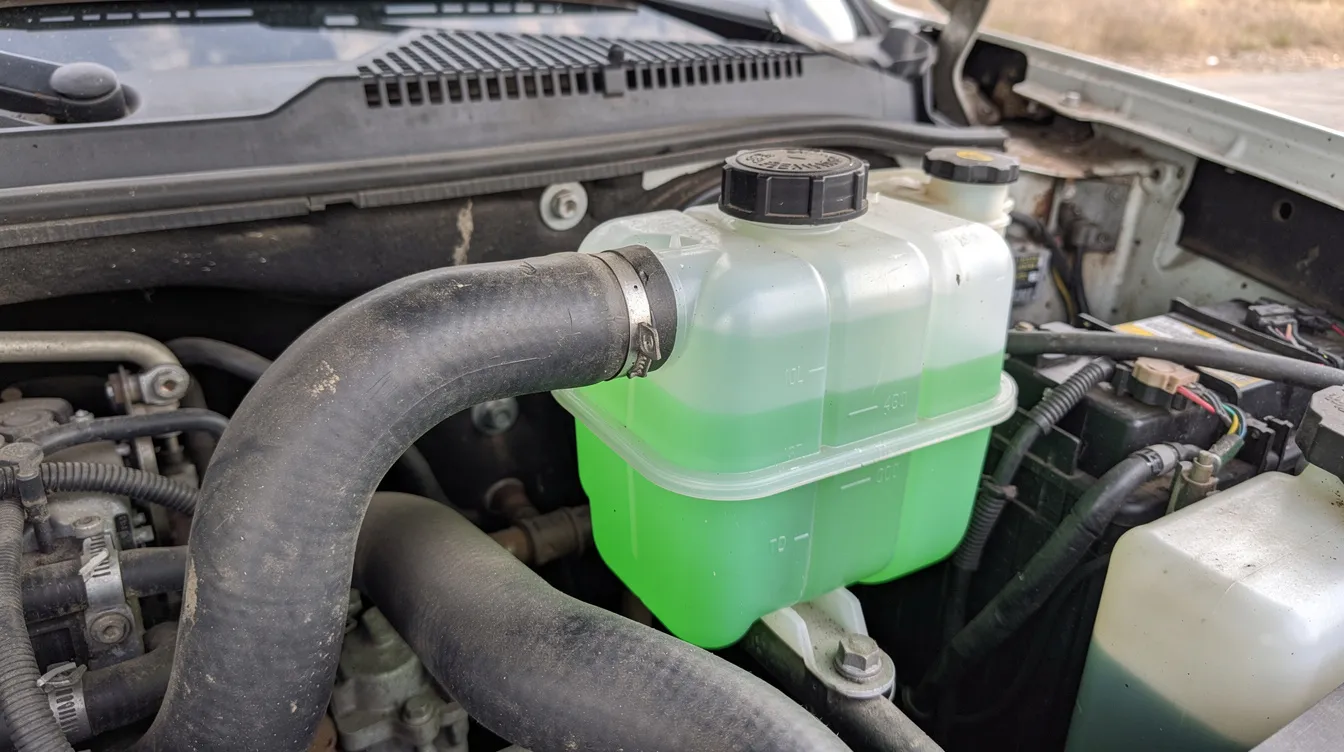
Check the coolant reservoir regularly. A falling coolant level, even without puddles, can mean tiny leaks are evaporating on hot metal.
Running a vehicle with low coolant levels can put excessive strain on the water pump, leading to overheating and potential failure. Low coolant also allows air pockets, reduced coolant flow, and extra stress on seals.
Poor Heater Performance Inside the Cab
The heater core relies on hot coolant flow. If the heater core blows lukewarm air at idle but improves with RPM, the pump may not be circulating coolant properly.
Poor heat can also come from air in the car’s cooling system, thermostat issues, or other components. But poor heat plus coolant loss often points back to a failing water pump early.
What Causes a Water Pump to Fail?
Water pump failure is often caused by wear and tear on internal components such as the impeller, seals, and bearings, which can degrade over time due to high temperatures and pressure. Dust, vibration, idling, and heavy loads increase pump wear in work trucks and machines.
Normal Wear and High Mileage
A water pump is a mechanical component that spins for thousands of hours. Many light-duty pumps last about 60,000–100,000 miles, while heavy-duty life depends more on hours, load, coolant, and service quality.
Contaminated or Improperly Mixed Coolant
Contaminated coolant can lead to water pump failure by causing rust, scale, and debris to build up in the system, damaging internal components and clogging coolant passages. Improperly mixed coolant or straight water can remove corrosion protection.
Use OEM-spec coolant, flush on schedule, and test fleet coolant for pH and additive strength.
Improper Installation or Low-Quality Parts
Incorrect installation of a water pump--such as misalignment or using the wrong gaskets--can cause the pump to fail prematurely. Over-torqued bolts, pinched seals, poor gasket prep, or a pulley out of line can create coolant leaks fast.
Fab Heavy Parts helps customers match parts by engine model, machine type, or part number to reduce wrong-fit risk.
Low Coolant Level and Air in the System
Low coolant makes the pump move air instead of liquid. That can cause cavitation, seal damage, and an overheated engine.
After service, bleed the system correctly so the pump is working properly and never runs dry.
Belt Tension and Drive System Problems
A loose belt slips. A tight belt overloads bearings. Worn idlers and tensioners can shake the shaft and shorten pump life.
Check belts whenever you inspect or replace cooling system components.
How to Confirm Your Water Pump Is Failing
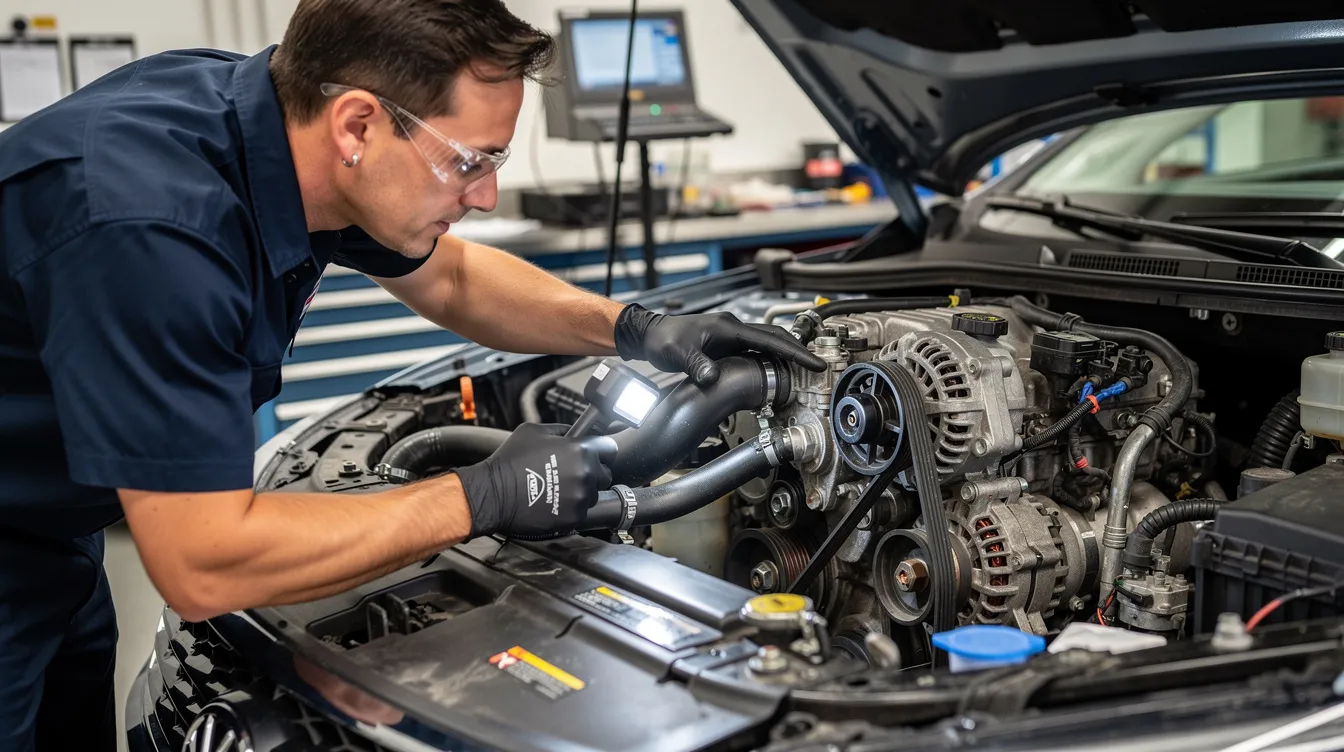
Symptoms point you in the right direction, but testing confirms the problem. A technician may check coolant flow, pulley play, visible leaks, corrosion, belt alignment, and engine temperature under load.
A shop may also run a pressure test on the cooling system. Dried coolant residue or streaks on the engine block can indicate that coolant has sprayed out under pressure, leaving behind a crusty deposit when it dries.
Why Early Water Pump Repair Matters for Heavy Equipment and Trucks
A malfunctioning water pump can lead to severe engine damage, including overheating and engine failure, if not addressed. A seized engine, cracked head, or damaged block costs far more than planned water pump replacement.
Planned repair keeps the vehicle running smoothly and protects your schedule. Emergency failure usually means towing, downtime, and expensive repairs.
How Fab Heavy Parts Can Help You Fix a Bad Water Pump
Fab Heavy Parts supplies heavy-duty and commercial-grade water pumps, gaskets, and related cooling parts for demanding applications. Search on fabheavyparts.com by truck make, engine model, machine type, or part number.
Our goal is simple: help owner-operators, technicians, and fleet managers fix a bad water pump the right way the first time.
FAQ
Q1: Can I keep driving if I think my water pump is failing?
A1: No. If the temperature gauge climbs, steam appears, or coolant leaks are visible, pull over safely and shut the engine off. Continuing can cause severe damage within minutes.
Q2: Can a water pump fail without any visible coolant leak?
A2: Yes. The pump’s internal impeller can crack, slip, or erode, causing reduced coolant flow without puddles. Overheating, poor cab heat, or unusual noises may be the only signs.
Q3: How long does a typical water pump last?
A3: Many passenger vehicle pumps last 60,000–100,000 miles. Heavy-duty pumps can last longer, but heat, load, idle time, contaminated coolant, and poor installation shorten life.
Q4: Should I replace anything else when I change the water pump?
A4: Often, yes. Replace gaskets, thermostat, belts, tensioners, hoses, or the timing belt if they are worn or due for service. This protects the full cooling system.
Q5: How can I prevent my new water pump from failing early?
A5: Use the correct coolant, maintain the coolant reservoir, fix leaks quickly, keep belts aligned, and choose a quality replacement pump. Fab Heavy Parts can help source the right parts for your application.
Popular Water Pumps at Fab Heavy Parts
1.
 6136-62-1102 6136-62-1100 Water Pump Fits for Komatsu 6D105 PC200-3 PC220-3 WA380
Part number: 6136-62-1102, 6136-62-1100
Application: The Water Pump fits for Komatsu PC200-3 PC220-3 WA380
Engine number: 6D105
2.
 4TNV94 4TNV98 Yanmar Engine Excavator Forklift Water Pump YM129907-42001 129907-42000 129907-42002
Part number: 129907-42000, YM129907-42000, YM129907-42001, 129907-42000, YM129907-42000, YM129907-42001
Engine Fitment: The Water Pump fits for 4TNV94, 4TNV98
3.
 New Water Pump 178-6633 1786633 Engine 3066 Fits for CAT Excavator 320 312 321 323
Engine number: 3064 3066 C4.2 C6 C6.4
OE number: 178-6633, 1786633
Condition: new, aftermarket replacement
Warranty: 6 months
Application: The Water Pump fits for Caterpillar excavator 311C, 311D, 312C, 312C L, 312D, 312D L, 313D, 314C, 314D CR, 314D LCR, 315D L, 318C, 318D L, 319C, 319D, 319D L, 319D LN, 320C, 320C FM, 320C L, 320D, 320D FM, 320D FM RR, 320D GC, 320D L, 320D LN, 320D LRR, 320D RR, 321C, 321D LCR, 323D L, 323D LN, 323D SA; MOBILE HYD POWER UNIT 323D L, 323D LN
4.
 6WG1 Engine Water Pump 8-98146073-0 8981460730 For Hitachi Excavator ZAX470-3 ZAXIS460-3 ZAX450
Engine fitment: 6WG1 Isuzu
Condition: new, aftermarket
Part number: 8-98146073-0, 8981460730, 1873109960, 1-87310996-0
Application: The Water Pump fits for Hitachi excavator ZAX470-3 ZAXIS460-3 ZAX450, CXZ EXZ CXR CYZ CYH
5.
 New Water Pump 25100-93G01 for Hyundai D6BT Engine R200-5 R210-5 Excavator, Engine D6BT
Part number: 25100-93G01
Engine number: D6BT
Application: The Water Pump fits for R200-5, R210-5 excavator
Condition: new, aftermarket
6.
 Original New Water Pump Assembly 8943768630 8-94376863-0 for Isuzu C240 Engine
Part number: 8943768630 8-94376863-0
Condition: new, original
Weight: 6kgs
We don't offer a warranty for this part.
The Water Pump fits for TCM, Komatsu Forklift trucks
FAB Heavy Parts: Your Trusted Engine Parts Supplier
Welcome to Fab Heavy Parts' online catalog, your trusted source for quality auto parts and tools. Explore our extensive selection of water pumps and more. Avoid delays by securing the parts you need from a reliable supplier who keeps inventory moving. Our expert team is here to provide personalized support, ensuring you get the right parts. Reach out today to stay ahead and keep your operations seamless!